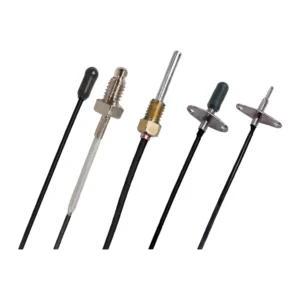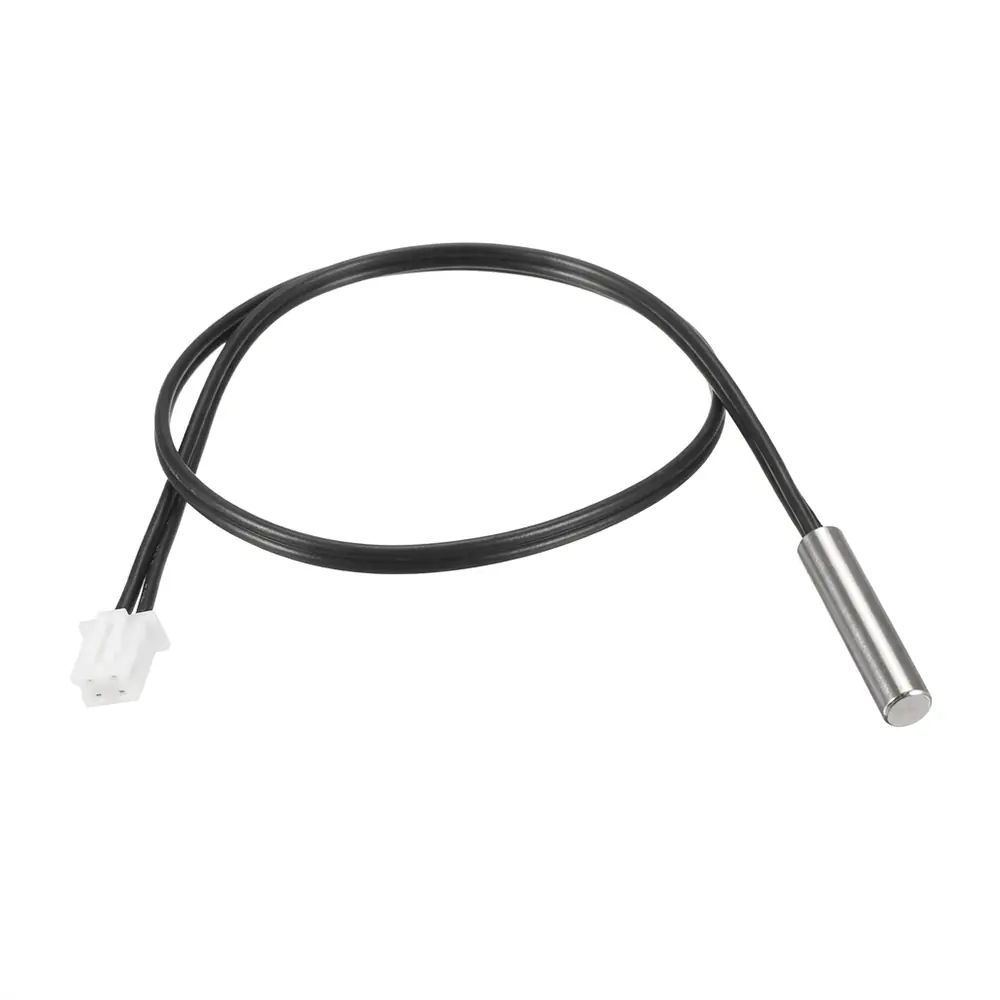
NTC Temperature Sensor
Product Description
The PT100 RTD sensor is widely recognized for its high measurement accuracy, excellent long-term stability, and outstanding repeatability. Its reliable performance makes it an ideal choice for applications where precise and consistent temperature monitoring is essential.
With strong resistance to electromagnetic interference, PT100 sensors are particularly suitable for industrial environments where electrical noise may affect measurement signals, including installations near motors, generators, power systems, and other high-voltage equipment.
PT100 RTD Temperature Sensor – Technical Specifications
| Parameter | Specification | Parameter | Specification |
|---|---|---|---|
| Probe Material | Food-Grade Stainless Steel SUS304 / SUS316 | Wire Configuration | 2-Wire / 3-Wire |
| Dielectric Withstand Voltage | Min. 1,250 V, 1 mA, 1 minute; higher test voltage available upon request | Cable Insulation Material | PTFE (Teflon) / Fiberglass |
| Insulation Resistance | Min. 100 MΩ at DC 500 V | Protective Sleeve Material | Fiberglass |
| Accuracy Class A | ±(0.15 + 0.002 × |t|) °C | Probe Dimensions | Custom dimensions available upon request |
| Accuracy Class B | ±(0.30 + 0.005 × |t|) °C | Connector | Available upon request |
Product Features
Key Features
- Flexible Installation: Customizable dimensions and material options allow easy integration into different installation environments and application requirements.
- Excellent Stability and Durability: Designed for consistent performance, reliable repeatability, and extended service life.
- Reliable Temperature Measurement: Stable temperature sensing characteristics ensure dependable measurement performance under normal operating conditions.
- High-Temperature Capability: Available in different temperature ratings, including 300°C and 500°C, to meet demanding application requirements.
- Electrical Safety: Dielectric withstand voltage options of 1,250 V, 2,000 V, and 3,000 V (1 mA, 1 minute), depending on product design and applicable standards.
- Material Compliance: Material options can be selected to meet relevant RoHS, REACH, FDA, and PAH requirements, depending on the application and certification scope.
Installation Guidelines
Depending on the application and operating environment, two installation approaches are recommended:
A. Standard Installation
Electrical connections can be made using conventional soldering techniques. Epoxy resin potting or encapsulation can be applied where additional fixation and environmental protection are required.
B. Vibration and Mechanical Impact Applications
For applications involving vibration or mechanical shock, secure the sensor by firmly clamping its housing and cable assembly to minimize movement and mechanical stress during operation.